
What Is a Stainless Steel Extraction Reactor and How Does It Work?
2026-09-03
What Is a Stainless Steel Extraction Reactor and How Does It Work?
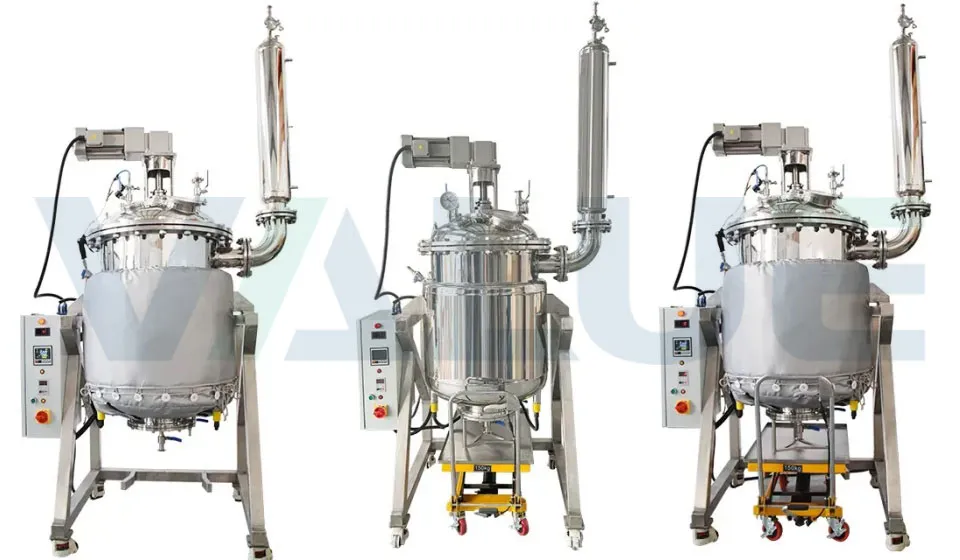
A stainless steel extraction reactor is specialized process equipment designed to facilitate the extraction of useful compounds or active ingredients from raw materials. By combining controlled mixing, temperature management, solvent contact, and, when required, vacuum operation, the system provides a controlled environment for extraction processes.
Compared with simple extraction tanks, an extraction reactor can integrate several process functions into one system. Depending on the application, it may be equipped with an agitator, heating or cooling jacket, condenser, vacuum connection, filtration components, and other accessories.
Because of its robust construction and flexible configuration, stainless steel extraction equipment is widely considered for applications that require reliable operation, repeatable processing conditions, and larger processing capacities.
What Is a Stainless Steel Extraction Reactor?
A stainless steel extraction reactor is a closed or semi-closed vessel in which raw materials are brought into contact with a suitable extraction solvent under controlled process conditions.
The basic objective of extraction is to transfer specific components from a solid, liquid, or other feed material into a selected solvent. The reactor provides the environment needed to improve this transfer through controlled agitation, temperature, and residence time.
The main vessel is generally manufactured from stainless steel, with the exact grade selected according to the chemicals, temperature, pressure, hygiene requirements, and intended application.
A typical system may include:
l Stainless steel extraction vessel
l Motor and agitator
l Heating or cooling jacket
l Temperature sensor
l Condenser
l Vacuum connection
l Solvent inlet
l Material feeding port
l Drain or discharge valve
l Filtration or separation components
The actual configuration can vary significantly depending on the extraction process.
How Does a Stainless Steel Extraction Reactor Work?
The extraction process generally involves several interconnected steps.
1. Loading the Raw Material
The raw material is first introduced into the extraction vessel.
Depending on the application, the feed may consist of plant materials, pharmaceutical ingredients, food materials, chemical compounds, or other solid or liquid substances.
Particle size can influence extraction performance. Smaller and more uniform particles generally provide a greater surface area for contact with the solvent, although the optimum preparation depends on the specific material and process.
2. Adding the Extraction Solvent
A suitable solvent is introduced into the vessel and brought into contact with the raw material.
The choice of solvent depends on the target compound and the required separation characteristics. Different processes may use water, ethanol, organic solvents, or other compatible extraction media.
The reactor allows the solvent-to-material ratio to be controlled more consistently than simple open-vessel extraction methods.
3. Agitating the Mixture
The agitator continuously moves the material and solvent inside the vessel.
Mixing improves contact between the solid material and the extraction liquid, helping the target compounds transfer into the solvent.
Agitation speed and impeller design should be selected according to the viscosity, solids content, particle characteristics, and sensitivity of the material.
4. Controlling the Temperature
Temperature can have a significant influence on extraction efficiency.
A heating or cooling medium can be circulated through the reactor jacket to maintain the desired process temperature.
Increasing the temperature may accelerate mass transfer and improve the solubility of certain compounds. However, excessive heat can also damage temperature-sensitive substances or promote unwanted reactions.
For this reason, temperature control should be determined according to the properties of the raw material, solvent, and target compounds.
5. Maintaining the Required Extraction Time
The mixture is maintained under the selected conditions for a defined period.
During this stage, the target components gradually move from the original material into the solvent.
Extraction time depends on factors such as material characteristics, solvent selection, temperature, agitation, particle size, and the desired extraction yield.
6. Separation and Collection
Once extraction is complete, the resulting mixture can be transferred to a separation stage.
Depending on the process, solid residues may be removed through filtration, while the extract solution is collected for subsequent concentration, purification, evaporation, crystallization, or other processing.
A properly designed extraction system can therefore serve as the first major step in a larger production process.
Why Use Stainless Steel for an Extraction Reactor?
The choice of stainless steel is important for applications that require mechanical strength, durability, and resistance to demanding process conditions.
Mechanical Strength
Stainless steel provides a rigid structure suitable for larger-volume processing equipment.
Compared with fragile materials, stainless steel construction is better suited to industrial environments where equipment may be exposed to mechanical loads, repeated operation, and material handling.
Corrosion Resistance
Many stainless steel grades provide good resistance to corrosion.
The appropriate grade should still be selected according to the solvent, raw material, temperature, concentration, and other operating conditions.
For applications involving aggressive chemicals, material compatibility should always be evaluated before equipment selection.
Suitable for Temperature-Controlled Processing
Stainless steel vessels can be combined with external heating or cooling systems to regulate process temperature.
This makes the equipment suitable for extraction procedures where temperature has a direct impact on solvent performance or extraction efficiency.
Easy to Integrate Into Process Systems
A stainless steel extraction reactor can be designed with different ports, valves, pumps, condensers, vacuum systems, and separation equipment.
This allows the reactor to be integrated into a wider production line rather than functioning as an isolated vessel.
Where Are Stainless Steel Extraction Reactors Used?
Extraction reactors can be applied across a variety of industries.
Pharmaceutical and Natural Product Extraction
In pharmaceutical and natural-product processing, extraction may be used to separate active compounds from plant or other biological materials.
Controlled temperature, mixing, and solvent contact can help improve process consistency.
Food and Beverage Processing
Extraction is also commonly associated with the recovery of flavors, pigments, oils, and other valuable components from food-related raw materials.
The reactor configuration can be adapted to suit different raw materials and production scales.
Botanical and Herbal Processing
Plant-based materials often require controlled contact with a solvent to recover desired compounds.
A stainless steel extraction reactor can provide a more controlled environment than traditional open-vessel extraction methods.
Chemical Processing
In chemical manufacturing, extraction may be used to separate specific components from a mixture or transfer a desired compound between phases.
The reactor can be configured according to solvent compatibility, temperature requirements, mixing conditions, and downstream separation needs.
What Role Does Vacuum Play in an Extraction Reactor?
Some extraction processes use a vacuum system to reduce the pressure inside the reactor.
Vacuum operation can be useful when a process involves volatile solvents, solvent recovery, degassing, or lower-temperature evaporation.
For example, reducing the pressure can lower the boiling point of certain solvents. This may allow solvent removal at a lower temperature, which can be beneficial when processing heat-sensitive materials.
A vacuum pump is normally connected to the reactor through a dedicated vacuum port. A condenser can also be installed in the vapor path to help recover solvent vapor before it reaches the vacuum system.
The actual vacuum level should always remain within the equipment's specified operating limits.
What Other Equipment Can Be Connected to an Extraction Reactor?
An extraction reactor is often part of a complete processing system rather than a standalone machine.
Circulating Heater
A circulating heater can supply heated thermal fluid to the reactor jacket.
This is useful when the extraction process requires a controlled elevated temperature.
Circulating Chiller
A chiller can provide cooled fluid when the process requires temperature reduction.
Cooling may be needed after extraction or during processes involving temperature-sensitive materials.
Vacuum Pump
A vacuum pump can be used for vacuum extraction, degassing, solvent evaporation, or other reduced-pressure operations.
Condenser
A condenser helps cool and recover vaporized solvent.
When heating is combined with vacuum operation, the condenser can be especially important for protecting the vacuum pump and improving solvent recovery.
Filtration System
After extraction, the mixture may contain solid residues.
A filtration unit can separate the extracted liquid from the remaining solids before downstream processing.
How Do You Choose the Right Extraction Reactor?
There is no single reactor configuration that is suitable for every extraction process.
Several factors should be considered before selecting the equipment.
1. Processing Capacity
Determine the required working volume rather than selecting equipment solely according to total vessel volume.
The reactor needs sufficient space for raw materials, solvent, agitation, thermal expansion, and potential foaming.
2. Material and Solvent Compatibility
Identify all materials that will come into contact with the reactor.
This includes the vessel, agitator, valves, seals, pipes, and other wetted components.
The selected stainless steel grade and sealing materials should be compatible with the process chemicals.
3. Temperature Range
Determine the minimum and maximum process temperatures.
This information will help determine whether the system requires heating, cooling, or both, as well as the appropriate thermal-control equipment.
4. Mixing Requirements
Consider the physical properties of the raw material and extraction mixture.
Highly viscous materials, suspensions, or processes with a high percentage of solids may require a different agitator design from low-viscosity liquids.
5. Vacuum Requirements
If the process involves reduced pressure, specify the required vacuum level and determine whether the reactor, seals, condenser, and vacuum pump are suitable for the intended conditions.
6. Downstream Processing
Extraction is often only one stage of the complete process.
If the extract will subsequently undergo concentration, evaporation, crystallization, or filtration, it may be beneficial to design the reactor system with these downstream steps in mind.
What Is the Difference Between a Standard Extraction Tank and an Extraction Reactor?
A simple extraction tank may primarily provide a container for mixing raw materials and solvents.
An extraction reactor, on the other hand, can integrate additional process functions such as controlled heating and cooling, mechanical agitation, vacuum operation, condensation, feeding, and separation.
The right choice depends on the complexity of the extraction process.
For basic soaking or mixing applications, a simpler vessel may be sufficient. For processes requiring precise control over temperature, pressure, mixing, and solvent recovery, a more complete extraction reactor system can provide greater flexibility.
How Can Extraction Efficiency Be Improved?
Equipment selection is only one part of improving extraction performance.
Process parameters should also be evaluated systematically.
Important variables may include:
l Raw material particle size
l Solvent selection
l Solvent-to-material ratio
l Extraction temperature
l Agitation speed
l Extraction time
l Operating pressure
l Number of extraction cycles
Changing one parameter can influence the others. For example, increasing temperature may improve mass transfer but could also affect the stability of temperature-sensitive compounds.
For this reason, laboratory testing and process validation are recommended before scaling an extraction process to larger equipment.
Conclusion
A stainless steel extraction reactor provides a controlled environment for transferring valuable components from raw materials into a selected solvent. By combining mixing, temperature regulation, and optional functions such as vacuum operation, condensation, and filtration, the equipment can support a wide range of extraction processes.
When selecting an extraction reactor, the most important considerations are not simply vessel size or purchase price. Process conditions, material compatibility, temperature range, mixing requirements, vacuum needs, and downstream operations should all be evaluated together.
A properly configured system can improve process consistency, simplify operation, and provide a reliable foundation for scaling extraction from laboratory development to larger-scale production.
What Is a Stainless Steel Extraction Reactor and How Does It Work?
A stainless steel extraction reactor is specialized process equipment designed to facilitate the extraction of useful compounds or active ingredients from raw materials. By combining controlled mixing, temperature management, solvent contact, and, when required, vacuum operation, the system provides a controlled environment for extraction processes.
Compared with simple extraction tanks, an extraction reactor can integrate several process functions into one system. Depending on the application, it may be equipped with an agitator, heating or cooling jacket, condenser, vacuum connection, filtration components, and other accessories.
Because of its robust construction and flexible configuration, stainless steel extraction equipment is widely considered for applications that require reliable operation, repeatable processing conditions, and larger processing capacities.
What Is a Stainless Steel Extraction Reactor?
A stainless steel extraction reactor is a closed or semi-closed vessel in which raw materials are brought into contact with a suitable extraction solvent under controlled process conditions.
The basic objective of extraction is to transfer specific components from a solid, liquid, or other feed material into a selected solvent. The reactor provides the environment needed to improve this transfer through controlled agitation, temperature, and residence time.
The main vessel is generally manufactured from stainless steel, with the exact grade selected according to the chemicals, temperature, pressure, hygiene requirements, and intended application.
A typical system may include:
l Stainless steel extraction vessel
l Motor and agitator
l Heating or cooling jacket
l Temperature sensor
l Condenser
l Vacuum connection
l Solvent inlet
l Material feeding port
l Drain or discharge valve
l Filtration or separation components
The actual configuration can vary significantly depending on the extraction process.
How Does a Stainless Steel Extraction Reactor Work?
The extraction process generally involves several interconnected steps.
1. Loading the Raw Material
The raw material is first introduced into the extraction vessel.
Depending on the application, the feed may consist of plant materials, pharmaceutical ingredients, food materials, chemical compounds, or other solid or liquid substances.
Particle size can influence extraction performance. Smaller and more uniform particles generally provide a greater surface area for contact with the solvent, although the optimum preparation depends on the specific material and process.
2. Adding the Extraction Solvent
A suitable solvent is introduced into the vessel and brought into contact with the raw material.
The choice of solvent depends on the target compound and the required separation characteristics. Different processes may use water, ethanol, organic solvents, or other compatible extraction media.
The reactor allows the solvent-to-material ratio to be controlled more consistently than simple open-vessel extraction methods.
3. Agitating the Mixture
The agitator continuously moves the material and solvent inside the vessel.
Mixing improves contact between the solid material and the extraction liquid, helping the target compounds transfer into the solvent.
Agitation speed and impeller design should be selected according to the viscosity, solids content, particle characteristics, and sensitivity of the material.
4. Controlling the Temperature
Temperature can have a significant influence on extraction efficiency.
A heating or cooling medium can be circulated through the reactor jacket to maintain the desired process temperature.
Increasing the temperature may accelerate mass transfer and improve the solubility of certain compounds. However, excessive heat can also damage temperature-sensitive substances or promote unwanted reactions.
For this reason, temperature control should be determined according to the properties of the raw material, solvent, and target compounds.
5. Maintaining the Required Extraction Time
The mixture is maintained under the selected conditions for a defined period.
During this stage, the target components gradually move from the original material into the solvent.
Extraction time depends on factors such as material characteristics, solvent selection, temperature, agitation, particle size, and the desired extraction yield.
6. Separation and Collection
Once extraction is complete, the resulting mixture can be transferred to a separation stage.
Depending on the process, solid residues may be removed through filtration, while the extract solution is collected for subsequent concentration, purification, evaporation, crystallization, or other processing.
A properly designed extraction system can therefore serve as the first major step in a larger production process.
Why Use Stainless Steel for an Extraction Reactor?
The choice of stainless steel is important for applications that require mechanical strength, durability, and resistance to demanding process conditions.
Mechanical Strength
Stainless steel provides a rigid structure suitable for larger-volume processing equipment.
Compared with fragile materials, stainless steel construction is better suited to industrial environments where equipment may be exposed to mechanical loads, repeated operation, and material handling.
Corrosion Resistance
Many stainless steel grades provide good resistance to corrosion.
The appropriate grade should still be selected according to the solvent, raw material, temperature, concentration, and other operating conditions.
For applications involving aggressive chemicals, material compatibility should always be evaluated before equipment selection.
Suitable for Temperature-Controlled Processing
Stainless steel vessels can be combined with external heating or cooling systems to regulate process temperature.
This makes the equipment suitable for extraction procedures where temperature has a direct impact on solvent performance or extraction efficiency.
Easy to Integrate Into Process Systems
A stainless steel extraction reactor can be designed with different ports, valves, pumps, condensers, vacuum systems, and separation equipment.
This allows the reactor to be integrated into a wider production line rather than functioning as an isolated vessel.
Where Are Stainless Steel Extraction Reactors Used?
Extraction reactors can be applied across a variety of industries.
Pharmaceutical and Natural Product Extraction
In pharmaceutical and natural-product processing, extraction may be used to separate active compounds from plant or other biological materials.
Controlled temperature, mixing, and solvent contact can help improve process consistency.
Food and Beverage Processing
Extraction is also commonly associated with the recovery of flavors, pigments, oils, and other valuable components from food-related raw materials.
The reactor configuration can be adapted to suit different raw materials and production scales.
Botanical and Herbal Processing
Plant-based materials often require controlled contact with a solvent to recover desired compounds.
A stainless steel extraction reactor can provide a more controlled environment than traditional open-vessel extraction methods.
Chemical Processing
In chemical manufacturing, extraction may be used to separate specific components from a mixture or transfer a desired compound between phases.
The reactor can be configured according to solvent compatibility, temperature requirements, mixing conditions, and downstream separation needs.
What Role Does Vacuum Play in an Extraction Reactor?
Some extraction processes use a vacuum system to reduce the pressure inside the reactor.
Vacuum operation can be useful when a process involves volatile solvents, solvent recovery, degassing, or lower-temperature evaporation.
For example, reducing the pressure can lower the boiling point of certain solvents. This may allow solvent removal at a lower temperature, which can be beneficial when processing heat-sensitive materials.
A vacuum pump is normally connected to the reactor through a dedicated vacuum port. A condenser can also be installed in the vapor path to help recover solvent vapor before it reaches the vacuum system.
The actual vacuum level should always remain within the equipment's specified operating limits.
What Other Equipment Can Be Connected to an Extraction Reactor?
An extraction reactor is often part of a complete processing system rather than a standalone machine.
Circulating Heater
A circulating heater can supply heated thermal fluid to the reactor jacket.
This is useful when the extraction process requires a controlled elevated temperature.
Circulating Chiller
A chiller can provide cooled fluid when the process requires temperature reduction.
Cooling may be needed after extraction or during processes involving temperature-sensitive materials.
Vacuum Pump
A vacuum pump can be used for vacuum extraction, degassing, solvent evaporation, or other reduced-pressure operations.
Condenser
A condenser helps cool and recover vaporized solvent.
When heating is combined with vacuum operation, the condenser can be especially important for protecting the vacuum pump and improving solvent recovery.
Filtration System
After extraction, the mixture may contain solid residues.
A filtration unit can separate the extracted liquid from the remaining solids before downstream processing.
How Do You Choose the Right Extraction Reactor?
There is no single reactor configuration that is suitable for every extraction process.
Several factors should be considered before selecting the equipment.
1. Processing Capacity
Determine the required working volume rather than selecting equipment solely according to total vessel volume.
The reactor needs sufficient space for raw materials, solvent, agitation, thermal expansion, and potential foaming.
2. Material and Solvent Compatibility
Identify all materials that will come into contact with the reactor.
This includes the vessel, agitator, valves, seals, pipes, and other wetted components.
The selected stainless steel grade and sealing materials should be compatible with the process chemicals.
3. Temperature Range
Determine the minimum and maximum process temperatures.
This information will help determine whether the system requires heating, cooling, or both, as well as the appropriate thermal-control equipment.
4. Mixing Requirements
Consider the physical properties of the raw material and extraction mixture.
Highly viscous materials, suspensions, or processes with a high percentage of solids may require a different agitator design from low-viscosity liquids.
5. Vacuum Requirements
If the process involves reduced pressure, specify the required vacuum level and determine whether the reactor, seals, condenser, and vacuum pump are suitable for the intended conditions.
6. Downstream Processing
Extraction is often only one stage of the complete process.
If the extract will subsequently undergo concentration, evaporation, crystallization, or filtration, it may be beneficial to design the reactor system with these downstream steps in mind.
What Is the Difference Between a Standard Extraction Tank and an Extraction Reactor?
A simple extraction tank may primarily provide a container for mixing raw materials and solvents.
An extraction reactor, on the other hand, can integrate additional process functions such as controlled heating and cooling, mechanical agitation, vacuum operation, condensation, feeding, and separation.
The right choice depends on the complexity of the extraction process.
For basic soaking or mixing applications, a simpler vessel may be sufficient. For processes requiring precise control over temperature, pressure, mixing, and solvent recovery, a more complete extraction reactor system can provide greater flexibility.
How Can Extraction Efficiency Be Improved?
Equipment selection is only one part of improving extraction performance.
Process parameters should also be evaluated systematically.
Important variables may include:
l Raw material particle size
l Solvent selection
l Solvent-to-material ratio
l Extraction temperature
l Agitation speed
l Extraction time
l Operating pressure
l Number of extraction cycles
Changing one parameter can influence the others. For example, increasing temperature may improve mass transfer but could also affect the stability of temperature-sensitive compounds.
For this reason, laboratory testing and process validation are recommended before scaling an extraction process to larger equipment.
Conclusion
A stainless steel extraction reactor provides a controlled environment for transferring valuable components from raw materials into a selected solvent. By combining mixing, temperature regulation, and optional functions such as vacuum operation, condensation, and filtration, the equipment can support a wide range of extraction processes.
When selecting an extraction reactor, the most important considerations are not simply vessel size or purchase price. Process conditions, material compatibility, temperature range, mixing requirements, vacuum needs, and downstream operations should all be evaluated together.
A properly configured system can improve process consistency, simplify operation, and provide a reliable foundation for scaling extraction from laboratory development to larger-scale production.


