
What Is a Jacketed Glass Reactor and How Does It Work?
2026-08-27
What Is a Jacketed Glass Reactor and How Does It Work?
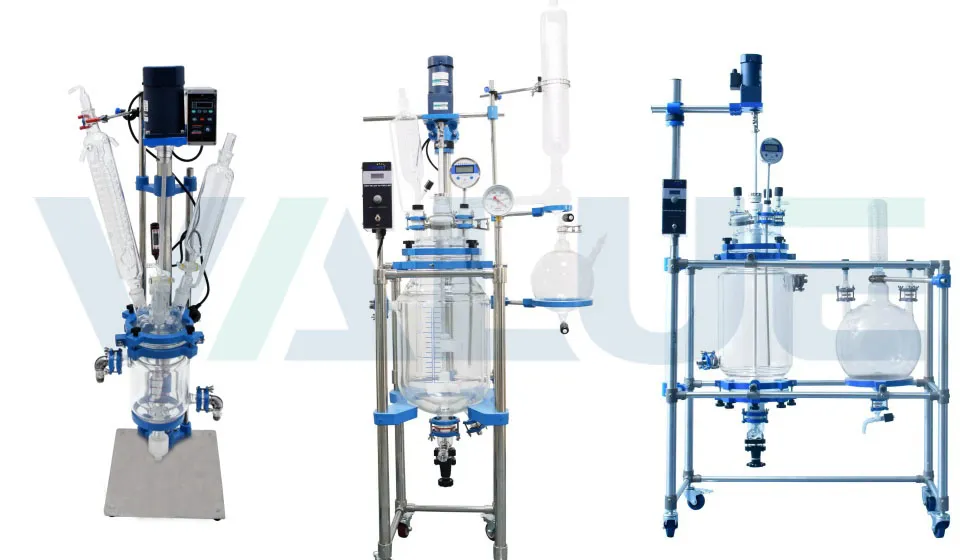
A jacketed glass reactor is a versatile piece of laboratory and process equipment used to carry out chemical reactions under controlled conditions. It combines a chemically resistant glass vessel with an external jacket that allows heating or cooling media to circulate around the reaction chamber.
Unlike a conventional single-wall reactor, a jacketed design gives operators greater control over reaction temperature without bringing the heating or cooling medium into direct contact with the process material. At the same time, the transparent vessel makes it possible to observe changes inside the reactor throughout the process.
These characteristics make jacketed glass reactors useful for chemical synthesis, formulation, crystallization, material research, pharmaceutical development, and other temperature-sensitive processes.
What Is a Jacketed Glass Reactor?
A jacketed glass reactor consists essentially of a reaction vessel surrounded by an additional outer layer, known as the jacket. The reaction takes place inside the main glass vessel, while a thermal fluid flows through the space between the inner vessel and the outer jacket.
Depending on the process requirements, the circulating medium can be heated or cooled. A heater, circulating bath, chiller, or combined heating and cooling system can therefore be connected to the reactor jacket.
The glass vessel is commonly manufactured from borosilicate glass. This material is widely used because it provides good resistance to many chemicals and can tolerate substantial temperature changes compared with ordinary glass.
Another important feature is visibility. Because the reaction vessel is transparent, researchers can visually inspect mixing, color changes, precipitation, foaming, phase separation, and other process changes while the reaction is taking place.
How Does a Jacketed Glass Reactor Work?
The operating principle is relatively straightforward: the reaction material is processed inside the vessel while a temperature-controlled fluid circulates through the surrounding jacket.
1. Materials Are Added to the Reactor
Reactants, solvents, catalysts, or other ingredients are introduced into the glass vessel through the available ports on the reactor lid.
Depending on the process, these ports can also be used for temperature sensors, feeding systems, vacuum connections, condensers, sampling devices, or other accessories.
2. The Stirring System Mixes the Contents
A motor-driven agitator is normally installed inside the reactor.
As the stirrer rotates, it promotes the movement of the liquid or suspension inside the vessel. Effective agitation helps improve contact between different materials and supports more uniform temperature and concentration throughout the reaction mixture.
Different impeller designs can be selected according to viscosity, solid content, mixing requirements, and process objectives.
3. Thermal Fluid Circulates Through the Jacket
The external jacket is the key component responsible for indirect temperature control.
A thermal medium is pumped through the jacket from an external heating or cooling unit. When heating is required, the circulating medium transfers heat through the reactor wall into the process material. When cooling is required, heat moves in the opposite direction—from the reaction mixture through the vessel wall and into the cooling medium.
This indirect heat-transfer method allows the reaction temperature to be adjusted without placing a heating element directly inside the product.
4. Temperature Is Monitored and Adjusted
A temperature sensor can be installed to measure the actual process temperature.
The operator can then adjust the temperature of the circulating medium according to the reaction requirements. For processes that require repeated heating and cooling stages, a programmable temperature-control system can provide more convenient operation.
This is particularly valuable when reaction rate, solubility, crystallization, or product stability depends strongly on temperature.
5. The Reaction Can Be Observed During Operation
One major advantage of a glass reactor is that the process can be viewed directly.
Operators can observe changes such as:
l Color variation
l Precipitation or crystallization
l Changes in liquid level
l Foaming
l Phase separation
l Solid dispersion
l Mixing behavior
This visual access provides useful information that is difficult to obtain with opaque metal vessels.
Why Is Temperature Control Important in a Glass Reactor?
Temperature can have a major influence on reaction kinetics, solubility, viscosity, crystallization behavior, and final product quality.
If a reaction becomes too hot, unwanted side reactions or product degradation may occur. If the temperature is too low, the reaction may proceed slowly or fail to reach the desired conversion.
A jacketed system helps address this problem by allowing the process temperature to be changed gradually and maintained within a defined range.
For example, a typical process may require:
Heating → Reaction → Cooling → Crystallization
A jacketed reactor can support these different stages by changing the temperature of the circulating fluid rather than manually heating or cooling the reaction vessel.
What Are the Advantages of Using a Jacketed Glass Reactor?
Precise Thermal Management
The jacket provides an indirect route for heating and cooling, allowing operators to manage the reaction temperature more effectively.
This is particularly useful for reactions where even relatively small temperature changes can influence the final result.
Excellent Chemical Visibility
The transparent glass body allows the operator to see what is happening inside the vessel.
This is useful during laboratory research and process development because visual observations can provide immediate feedback about the reaction.
Good Chemical Resistance
Borosilicate glass is resistant to many commonly used chemicals, making it suitable for a broad range of laboratory and pilot-scale applications.
However, chemical compatibility should always be evaluated for the specific reagents, concentrations, temperatures, and operating conditions involved.
Flexible Configuration
A jacketed glass reactor can be equipped with different accessories according to the process.
Common configurations may include:
l Mechanical stirrer
l Temperature probe
l Condenser
l Vacuum connection
l Feeding port
l Sampling port
l Pressure or vacuum gauge
l Heating circulator
l Cooling circulator
This modular configuration allows one reactor platform to support different experimental procedures.
Easy Process Observation
The transparent vessel makes it easier to identify unexpected changes during a reaction.
For research and development work, this can help operators understand the behavior of a process before moving toward larger-scale equipment.
Where Are Jacketed Glass Reactors Used?
Jacketed glass reactors are not limited to one particular industry. Their combination of temperature control, chemical resistance, mixing, and visibility makes them useful in many applications.
Pharmaceutical Research
In pharmaceutical development, jacketed reactors can be used for chemical synthesis, formulation studies, crystallization, and process optimization.
Controlled temperature conditions are especially important when researchers need to reproduce a reaction or investigate how temperature affects product formation.
Chemical Synthesis
Chemical laboratories use jacketed reactors for a wide range of synthesis processes involving heating, cooling, mixing, and controlled addition of reagents.
The ability to monitor the reaction visually can also be helpful when studying reaction behavior.
Crystallization
Temperature is often an important parameter in crystallization.
A jacketed reactor can be used to dissolve materials at an elevated temperature and then gradually reduce the temperature to encourage crystal formation under controlled conditions.
For applications requiring integrated filtration, specialized jacketed crystallization reactors can combine crystallization and solid-liquid separation in one system.
Material and Polymer Research
Temperature and mixing conditions can significantly affect material properties.
Jacketed reactors can therefore be used during laboratory-scale formulation and material development where controlled thermal conditions are required.
Food, Flavor, and Specialty Chemical Development
The equipment can also be applied to processes involving flavor compounds, specialty chemicals, formulations, and other temperature-sensitive materials.
The transparent vessel provides an additional advantage when researchers need to monitor the appearance or physical behavior of the material during processing.
What Equipment Is Usually Connected to a Jacketed Glass Reactor?
The reactor itself is only one part of a complete processing system. Additional equipment is selected according to the process.
Heating and Cooling Equipment
A circulating heater or chiller can supply the thermal fluid required by the reactor jacket.
For processes involving both heating and cooling, a combined heating and cooling unit may be more convenient.
Vacuum Pump
When a process needs reduced pressure, a vacuum pump can be connected to the reactor through the appropriate vacuum port.
Vacuum operation may be used for applications such as solvent removal, degassing, evaporation, or reactions that benefit from reduced operating pressure.
Condenser
A condenser can be installed above the reactor to recover vaporized solvents or other volatile components.
This is especially useful when the reaction involves heating under reflux or vacuum evaporation.
Feeding System
A feeding system can be used when reagents need to be introduced gradually or continuously.
For example, a peristaltic pump can provide controlled addition of liquid materials during a reaction.
How Should a Jacketed Glass Reactor Be Operated Safely?
Although jacketed glass reactors are designed for laboratory and process applications, proper operating procedures are essential.
Before operation, users should check:
1. Whether the glass vessel and jacket are free from visible damage.
2. Whether all connections and seals are correctly installed.
3. Whether the selected thermal fluid is compatible with the required temperature range.
4. Whether the stirring speed is appropriate for the material.
5. Whether the temperature sensor is correctly positioned.
6. Whether the condenser, vacuum system, and other accessories are properly connected.
7. Whether the reactor is being operated within its specified pressure and temperature limits.
After each process, the vessel should be cleaned appropriately to prevent cross-contamination and residue buildup.
Because glass equipment can be damaged by mechanical impact or unsuitable thermal conditions, operators should also avoid sudden temperature changes and unnecessary physical stress on the vessel.
How Do You Choose the Right Jacketed Glass Reactor?
The right reactor depends on more than just vessel volume.
Before selecting a model, consider the following factors:
Working volume:
Choose a vessel size that provides sufficient space for mixing, expansion, foaming, and other process requirements.
Reaction temperature:
Determine the required heating and cooling range and select a suitable thermal-control system.
Material compatibility:
Check whether the glass, seals, valves, and other wetted components are compatible with the chemicals being processed.
Mixing requirements:
Consider viscosity, solid content, impeller type, stirring speed, and required mixing performance.
Vacuum requirements:
If vacuum operation is necessary, make sure the reactor and accessories are suitable for the intended vacuum conditions.
Additional functions:
Depending on the application, you may need feeding systems, condensers, sampling ports, temperature probes, or other process accessories.
Conclusion
So, what is a jacketed glass reactor and why is it useful?
In simple terms, it is a transparent reaction vessel with an external thermal jacket that enables controlled heating and cooling. Combined with mechanical stirring and optional accessories such as condensers, vacuum pumps, feeding systems, heaters, and chillers, it can become a flexible platform for laboratory research and pilot-scale chemical processing.
Its main advantages come from three features: controlled temperature, chemical-resistant glass, and direct process visibility.
For applications involving synthesis, crystallization, formulation, material research, or other temperature-sensitive processes, a properly configured jacketed glass reactor can provide a practical way to investigate and control reaction conditions before moving toward larger-scale production.
What Is a Jacketed Glass Reactor and How Does It Work?
A jacketed glass reactor is a versatile piece of laboratory and process equipment used to carry out chemical reactions under controlled conditions. It combines a chemically resistant glass vessel with an external jacket that allows heating or cooling media to circulate around the reaction chamber.
Unlike a conventional single-wall reactor, a jacketed design gives operators greater control over reaction temperature without bringing the heating or cooling medium into direct contact with the process material. At the same time, the transparent vessel makes it possible to observe changes inside the reactor throughout the process.
These characteristics make jacketed glass reactors useful for chemical synthesis, formulation, crystallization, material research, pharmaceutical development, and other temperature-sensitive processes.
What Is a Jacketed Glass Reactor?
A jacketed glass reactor consists essentially of a reaction vessel surrounded by an additional outer layer, known as the jacket. The reaction takes place inside the main glass vessel, while a thermal fluid flows through the space between the inner vessel and the outer jacket.
Depending on the process requirements, the circulating medium can be heated or cooled. A heater, circulating bath, chiller, or combined heating and cooling system can therefore be connected to the reactor jacket.
The glass vessel is commonly manufactured from borosilicate glass. This material is widely used because it provides good resistance to many chemicals and can tolerate substantial temperature changes compared with ordinary glass.
Another important feature is visibility. Because the reaction vessel is transparent, researchers can visually inspect mixing, color changes, precipitation, foaming, phase separation, and other process changes while the reaction is taking place.
How Does a Jacketed Glass Reactor Work?
The operating principle is relatively straightforward: the reaction material is processed inside the vessel while a temperature-controlled fluid circulates through the surrounding jacket.
1. Materials Are Added to the Reactor
Reactants, solvents, catalysts, or other ingredients are introduced into the glass vessel through the available ports on the reactor lid.
Depending on the process, these ports can also be used for temperature sensors, feeding systems, vacuum connections, condensers, sampling devices, or other accessories.
2. The Stirring System Mixes the Contents
A motor-driven agitator is normally installed inside the reactor.
As the stirrer rotates, it promotes the movement of the liquid or suspension inside the vessel. Effective agitation helps improve contact between different materials and supports more uniform temperature and concentration throughout the reaction mixture.
Different impeller designs can be selected according to viscosity, solid content, mixing requirements, and process objectives.
3. Thermal Fluid Circulates Through the Jacket
The external jacket is the key component responsible for indirect temperature control.
A thermal medium is pumped through the jacket from an external heating or cooling unit. When heating is required, the circulating medium transfers heat through the reactor wall into the process material. When cooling is required, heat moves in the opposite direction—from the reaction mixture through the vessel wall and into the cooling medium.
This indirect heat-transfer method allows the reaction temperature to be adjusted without placing a heating element directly inside the product.
4. Temperature Is Monitored and Adjusted
A temperature sensor can be installed to measure the actual process temperature.
The operator can then adjust the temperature of the circulating medium according to the reaction requirements. For processes that require repeated heating and cooling stages, a programmable temperature-control system can provide more convenient operation.
This is particularly valuable when reaction rate, solubility, crystallization, or product stability depends strongly on temperature.
5. The Reaction Can Be Observed During Operation
One major advantage of a glass reactor is that the process can be viewed directly.
Operators can observe changes such as:
l Color variation
l Precipitation or crystallization
l Changes in liquid level
l Foaming
l Phase separation
l Solid dispersion
l Mixing behavior
This visual access provides useful information that is difficult to obtain with opaque metal vessels.
Why Is Temperature Control Important in a Glass Reactor?
Temperature can have a major influence on reaction kinetics, solubility, viscosity, crystallization behavior, and final product quality.
If a reaction becomes too hot, unwanted side reactions or product degradation may occur. If the temperature is too low, the reaction may proceed slowly or fail to reach the desired conversion.
A jacketed system helps address this problem by allowing the process temperature to be changed gradually and maintained within a defined range.
For example, a typical process may require:
Heating → Reaction → Cooling → Crystallization
A jacketed reactor can support these different stages by changing the temperature of the circulating fluid rather than manually heating or cooling the reaction vessel.
What Are the Advantages of Using a Jacketed Glass Reactor?
Precise Thermal Management
The jacket provides an indirect route for heating and cooling, allowing operators to manage the reaction temperature more effectively.
This is particularly useful for reactions where even relatively small temperature changes can influence the final result.
Excellent Chemical Visibility
The transparent glass body allows the operator to see what is happening inside the vessel.
This is useful during laboratory research and process development because visual observations can provide immediate feedback about the reaction.
Good Chemical Resistance
Borosilicate glass is resistant to many commonly used chemicals, making it suitable for a broad range of laboratory and pilot-scale applications.
However, chemical compatibility should always be evaluated for the specific reagents, concentrations, temperatures, and operating conditions involved.
Flexible Configuration
A jacketed glass reactor can be equipped with different accessories according to the process.
Common configurations may include:
l Mechanical stirrer
l Temperature probe
l Condenser
l Vacuum connection
l Feeding port
l Sampling port
l Pressure or vacuum gauge
l Heating circulator
l Cooling circulator
This modular configuration allows one reactor platform to support different experimental procedures.
Easy Process Observation
The transparent vessel makes it easier to identify unexpected changes during a reaction.
For research and development work, this can help operators understand the behavior of a process before moving toward larger-scale equipment.
Where Are Jacketed Glass Reactors Used?
Jacketed glass reactors are not limited to one particular industry. Their combination of temperature control, chemical resistance, mixing, and visibility makes them useful in many applications.
Pharmaceutical Research
In pharmaceutical development, jacketed reactors can be used for chemical synthesis, formulation studies, crystallization, and process optimization.
Controlled temperature conditions are especially important when researchers need to reproduce a reaction or investigate how temperature affects product formation.
Chemical Synthesis
Chemical laboratories use jacketed reactors for a wide range of synthesis processes involving heating, cooling, mixing, and controlled addition of reagents.
The ability to monitor the reaction visually can also be helpful when studying reaction behavior.
Crystallization
Temperature is often an important parameter in crystallization.
A jacketed reactor can be used to dissolve materials at an elevated temperature and then gradually reduce the temperature to encourage crystal formation under controlled conditions.
For applications requiring integrated filtration, specialized jacketed crystallization reactors can combine crystallization and solid-liquid separation in one system.
Material and Polymer Research
Temperature and mixing conditions can significantly affect material properties.
Jacketed reactors can therefore be used during laboratory-scale formulation and material development where controlled thermal conditions are required.
Food, Flavor, and Specialty Chemical Development
The equipment can also be applied to processes involving flavor compounds, specialty chemicals, formulations, and other temperature-sensitive materials.
The transparent vessel provides an additional advantage when researchers need to monitor the appearance or physical behavior of the material during processing.
What Equipment Is Usually Connected to a Jacketed Glass Reactor?
The reactor itself is only one part of a complete processing system. Additional equipment is selected according to the process.
Heating and Cooling Equipment
A circulating heater or chiller can supply the thermal fluid required by the reactor jacket.
For processes involving both heating and cooling, a combined heating and cooling unit may be more convenient.
Vacuum Pump
When a process needs reduced pressure, a vacuum pump can be connected to the reactor through the appropriate vacuum port.
Vacuum operation may be used for applications such as solvent removal, degassing, evaporation, or reactions that benefit from reduced operating pressure.
Condenser
A condenser can be installed above the reactor to recover vaporized solvents or other volatile components.
This is especially useful when the reaction involves heating under reflux or vacuum evaporation.
Feeding System
A feeding system can be used when reagents need to be introduced gradually or continuously.
For example, a peristaltic pump can provide controlled addition of liquid materials during a reaction.
How Should a Jacketed Glass Reactor Be Operated Safely?
Although jacketed glass reactors are designed for laboratory and process applications, proper operating procedures are essential.
Before operation, users should check:
1. Whether the glass vessel and jacket are free from visible damage.
2. Whether all connections and seals are correctly installed.
3. Whether the selected thermal fluid is compatible with the required temperature range.
4. Whether the stirring speed is appropriate for the material.
5. Whether the temperature sensor is correctly positioned.
6. Whether the condenser, vacuum system, and other accessories are properly connected.
7. Whether the reactor is being operated within its specified pressure and temperature limits.
After each process, the vessel should be cleaned appropriately to prevent cross-contamination and residue buildup.
Because glass equipment can be damaged by mechanical impact or unsuitable thermal conditions, operators should also avoid sudden temperature changes and unnecessary physical stress on the vessel.
How Do You Choose the Right Jacketed Glass Reactor?
The right reactor depends on more than just vessel volume.
Before selecting a model, consider the following factors:
Working volume:
Choose a vessel size that provides sufficient space for mixing, expansion, foaming, and other process requirements.
Reaction temperature:
Determine the required heating and cooling range and select a suitable thermal-control system.
Material compatibility:
Check whether the glass, seals, valves, and other wetted components are compatible with the chemicals being processed.
Mixing requirements:
Consider viscosity, solid content, impeller type, stirring speed, and required mixing performance.
Vacuum requirements:
If vacuum operation is necessary, make sure the reactor and accessories are suitable for the intended vacuum conditions.
Additional functions:
Depending on the application, you may need feeding systems, condensers, sampling ports, temperature probes, or other process accessories.
Conclusion
So, what is a jacketed glass reactor and why is it useful?
In simple terms, it is a transparent reaction vessel with an external thermal jacket that enables controlled heating and cooling. Combined with mechanical stirring and optional accessories such as condensers, vacuum pumps, feeding systems, heaters, and chillers, it can become a flexible platform for laboratory research and pilot-scale chemical processing.
Its main advantages come from three features: controlled temperature, chemical-resistant glass, and direct process visibility.
For applications involving synthesis, crystallization, formulation, material research, or other temperature-sensitive processes, a properly configured jacketed glass reactor can provide a practical way to investigate and control reaction conditions before moving toward larger-scale production.


