
What Is Borosilicate Glass 3.3 and Why Is It the Top Choice for Essential Oil Fraction Distillation?
2026-08-20
What Is Borosilicate Glass 3.3 and Why Is It the Top Choice for Essential Oil Fraction Distillation?
In botanical extraction and essential oil fraction distillation, selecting the right material is every bit as important as the process itself. The choice directly affects performance, product integrity, and overall efficiency. Among the various options available, high-borosilicate glass 3.3 has earned its reputation as the industry benchmark for laboratory and pilot-scale distillation systems—particularly when purity, chemical resistance, and visual monitoring are non-negotiable requirements.
What Exactly Is Borosilicate Glass 3.3?
Borosilicate glass 3.3 is a specialised technical glass renowned for its exceptionally low coefficient of thermal expansion—approximately 3.3 × 10⁻⁶ per kelvin. This property gives it outstanding resistance to thermal shock, allowing it to withstand rapid temperature changes without fracturing. Its composition is primarily silica (SiO₂) and boron trioxide (B₂O₃), which together impart superior chemical durability and structural integrity even under aggressive operating conditions.
Why Is It So Well Suited to Botanical Distillation?
Botanical distillation involves the thermal separation of volatile compounds from plant matter—a process that typically subjects equipment to fluctuating temperatures, exposure to acidic or reactive components, and the constant need for visual oversight. Borosilicate glass 3.3 rises to each of these challenges in several key ways.
1. Exceptional Thermal Resilience
Precise temperature control is fundamental to essential oil distillation, particularly in fractional distillation equipment. Borosilicate glass can endure operating temperatures up to 500°C and tolerate sudden cooling without cracking—a critical advantage during condensation and vacuum distillation phases, where thermal cycling is common.
2. Outstanding Chemical Compatibility
Many plant extracts and essential oils contain reactive or acidic constituents—citral, menthol, eugenol, and various terpenes, for example. Borosilicate glass resists corrosion and degradation from these substances, ensuring that the final distillate remains uncontaminated and true to its natural profile.
3. Unmatched Transparency for Real-Time Monitoring
One of the most compelling advantages of glass over stainless steel is the clear visibility it affords. Operators can observe boiling behaviour, condensation patterns, phase separation, and fraction collection in real time. This visual feedback is invaluable for fine-tuning purity and maximising yield—especially when processing high-value extracts such as lavender, rosemary, or peppermint oil.
4. Inert and Non-Leaching Surface
Unlike certain metals or plastics, borosilicate glass is chemically inert. It does not react with the distillate or leach any substances into the product. This characteristic is absolutely critical when producing therapeutic-grade or food-grade essential oils, where even trace contamination is unacceptable.
5. Robustness and Longevity
With proper handling, high-borosilicate glass offers excellent mechanical strength and can deliver years of reliable service in demanding laboratory or small-scale industrial environments. Its smooth, non-porous surface also makes it easy to clean, significantly reducing the risk of cross-contamination between batches.
Where Are Borosilicate Glass Fractional Distillation Systems Used?
These systems find application across a wide spectrum of industries and research settings, including:
l Essential oil production (lavender, eucalyptus, tea tree, and many others)
l Natural fragrance and flavour extraction
l Botanical research laboratories
l Pharmaceutical-grade compound isolation
l Pilot plants testing herbal extraction processes
Final Thoughts
Selecting the right material for your distillation equipment is about more than durability—it directly influences safety, product quality, and process efficiency. High-borosilicate glass 3.3 continues to be the preferred choice for professionals in the botanical and essential oil sectors, offering an unmatched combination of clarity, resilience, and chemical resistance in a single, versatile material.
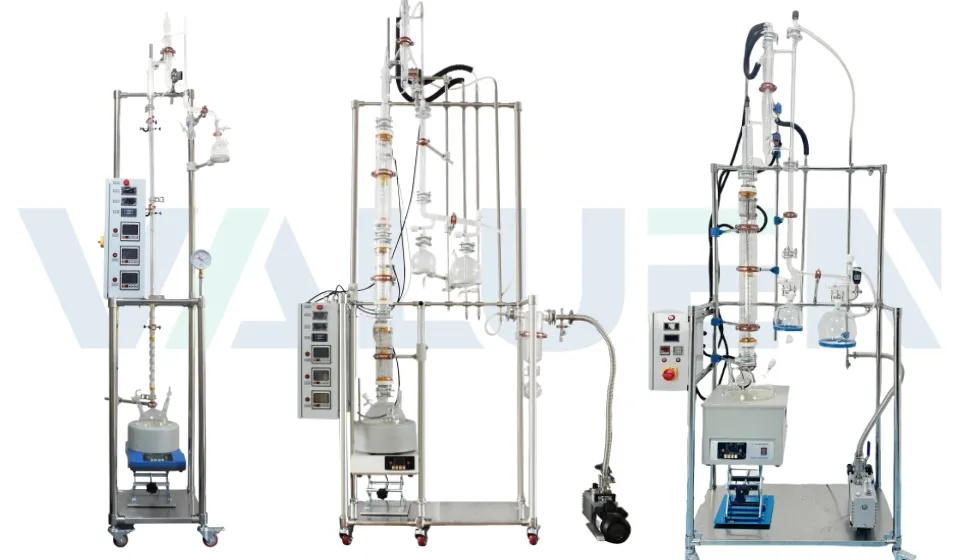
If you are considering a custom built glass fractional distillation unit for your botanical processing needs, we would be happy to discuss how we can tailor a solution to your specific requirements.
What Is Borosilicate Glass 3.3 and Why Is It the Top Choice for Essential Oil Fraction Distillation?
In botanical extraction and essential oil fraction distillation, selecting the right material is every bit as important as the process itself. The choice directly affects performance, product integrity, and overall efficiency. Among the various options available, high-borosilicate glass 3.3 has earned its reputation as the industry benchmark for laboratory and pilot-scale distillation systems—particularly when purity, chemical resistance, and visual monitoring are non-negotiable requirements.
What Exactly Is Borosilicate Glass 3.3?
Borosilicate glass 3.3 is a specialised technical glass renowned for its exceptionally low coefficient of thermal expansion—approximately 3.3 × 10⁻⁶ per kelvin. This property gives it outstanding resistance to thermal shock, allowing it to withstand rapid temperature changes without fracturing. Its composition is primarily silica (SiO₂) and boron trioxide (B₂O₃), which together impart superior chemical durability and structural integrity even under aggressive operating conditions.
Why Is It So Well Suited to Botanical Distillation?
Botanical distillation involves the thermal separation of volatile compounds from plant matter—a process that typically subjects equipment to fluctuating temperatures, exposure to acidic or reactive components, and the constant need for visual oversight. Borosilicate glass 3.3 rises to each of these challenges in several key ways.
1. Exceptional Thermal Resilience
Precise temperature control is fundamental to essential oil distillation, particularly in fractional distillation equipment. Borosilicate glass can endure operating temperatures up to 500°C and tolerate sudden cooling without cracking—a critical advantage during condensation and vacuum distillation phases, where thermal cycling is common.
2. Outstanding Chemical Compatibility
Many plant extracts and essential oils contain reactive or acidic constituents—citral, menthol, eugenol, and various terpenes, for example. Borosilicate glass resists corrosion and degradation from these substances, ensuring that the final distillate remains uncontaminated and true to its natural profile.
3. Unmatched Transparency for Real-Time Monitoring
One of the most compelling advantages of glass over stainless steel is the clear visibility it affords. Operators can observe boiling behaviour, condensation patterns, phase separation, and fraction collection in real time. This visual feedback is invaluable for fine-tuning purity and maximising yield—especially when processing high-value extracts such as lavender, rosemary, or peppermint oil.
4. Inert and Non-Leaching Surface
Unlike certain metals or plastics, borosilicate glass is chemically inert. It does not react with the distillate or leach any substances into the product. This characteristic is absolutely critical when producing therapeutic-grade or food-grade essential oils, where even trace contamination is unacceptable.
5. Robustness and Longevity
With proper handling, high-borosilicate glass offers excellent mechanical strength and can deliver years of reliable service in demanding laboratory or small-scale industrial environments. Its smooth, non-porous surface also makes it easy to clean, significantly reducing the risk of cross-contamination between batches.
Where Are Borosilicate Glass Fractional Distillation Systems Used?
These systems find application across a wide spectrum of industries and research settings, including:
l Essential oil production (lavender, eucalyptus, tea tree, and many others)
l Natural fragrance and flavour extraction
l Botanical research laboratories
l Pharmaceutical-grade compound isolation
l Pilot plants testing herbal extraction processes
Final Thoughts
Selecting the right material for your distillation equipment is about more than durability—it directly influences safety, product quality, and process efficiency. High-borosilicate glass 3.3 continues to be the preferred choice for professionals in the botanical and essential oil sectors, offering an unmatched combination of clarity, resilience, and chemical resistance in a single, versatile material.
If you are considering a custom built glass fractional distillation unit for your botanical processing needs, we would be happy to discuss how we can tailor a solution to your specific requirements.


