
How to Improve the Efficiency of Glass Wiped Film Distillation
2026-10-10
How to Improve the Efficiency of Glass Wiped Film Distillation
Glass wiped film distillation is used to separate and purify materials that may be sensitive to heat. Its performance depends on several factors, including film formation, vacuum conditions, temperature control, rotor design, and material residence time. Optimizing these parameters can help improve evaporation performance while maintaining product quality.
1. How Does Glass Wiped Film Distillation Work?
In a glass wiped film evaporator, liquid is distributed across a heated surface to form a thin film. A rotating wiper continuously spreads and moves the material, supporting heat transfer and allowing volatile components to evaporate.
Compared with conventional distillation methods, wiped film technology can reduce the time materials spend exposed to heat. This makes it useful for processing heat-sensitive compounds and viscous liquids.
Glass construction also allows operators to observe the material during processing, which is helpful for laboratory research, process development, and small-scale production.
2. What Factors Affect Distillation Efficiency?
Several operating and equipment parameters influence the performance of a glass wiped film distillation system.
Vacuum Level
Operating under vacuum lowers the boiling temperature of many substances, helping reduce thermal stress during evaporation. The appropriate vacuum level depends on the properties of the material, its volatility, and the desired separation results.
Stable vacuum conditions can help maintain consistent operation, particularly when processing heat-sensitive compounds.
Temperature Control
Accurate temperature regulation is important for balancing evaporation performance and product quality. Excessive heating may cause degradation, while insufficient heating can reduce evaporation rates.
The heating system should therefore provide a suitable and stable temperature based on the material's characteristics and the required separation process.
Wiper and Rotor Design
The rotating wiper helps distribute the liquid evenly over the heated surface. A suitable wiper configuration promotes consistent film formation and reduces the risk of localized overheating.
Rotor design and rotational speed should be selected according to material viscosity and processing requirements. This is especially important for viscous liquids that are more difficult to distribute evenly.
Residence Time
Residence time refers to how long the material remains inside the evaporation zone. Shorter exposure can help limit thermal degradation, while adequate contact with the heated surface is still necessary for effective separation.
Adjusting feed rate, rotor speed, and operating conditions can help achieve a suitable balance between processing capacity and product quality.
3. Where Is Glass Wiped Film Distillation Used?
Glass wiped film distillation is suitable for applications that require controlled evaporation or purification under reduced pressure.
Pharmaceutical and specialty chemical processing: It can be used to separate solvents and purify suitable chemical compounds, particularly when temperature sensitivity is a concern.
Natural extracts and aromatic compounds: Carefully controlled evaporation can help preserve volatile components during the concentration or purification of suitable extracts.
Food and flavor processing: The technology may be applied to selected flavor compounds and extracts where maintaining aroma and product characteristics is important.
The actual suitability of the system depends on the material properties, required purity, and operating conditions.
4. How Can You Maintain Consistent Performance?
Good operating practices and regular maintenance help keep a wiped film distillation system working reliably.
- Monitor operating parameters: Keep track of temperature, vacuum level, feed rate, and rotor speed to identify changes in performance.
- Inspect the wiper assembly: Check for wear, damage, or buildup that could affect film distribution.
- Keep process surfaces clean: Remove residual material according to the appropriate cleaning procedure to reduce contamination and prevent deposits from affecting heat transfer.
- Check seals and connections: Inspect sealing components and vacuum connections regularly to identify potential leaks.
- Select suitable supporting equipment: Ensure that heating systems, vacuum pumps, condensers, and collection vessels are appropriate for the process requirements.
Consistent monitoring and preventive maintenance can reduce unexpected interruptions and help maintain stable product quality.
5. How Do You Choose the Right Glass Wiped Film Distillation System?
Before selecting a system, consider the material to be processed, its viscosity and thermal sensitivity, the required evaporation rate, and the target separation or purity.
The required operating temperature and vacuum level should also be confirmed. These factors influence the evaporator design and the selection of supporting equipment.
For more demanding applications, it may be useful to evaluate the feed system, rotor configuration, temperature-control capability, and condensate collection arrangement as a complete process setup rather than choosing the evaporator alone.
Conclusion
Improving glass wiped film distillation efficiency requires a balance between heat transfer, vacuum conditions, film distribution, temperature control, and residence time. The right combination helps support effective separation while reducing unnecessary thermal exposure.
By matching the equipment configuration to the material and maintaining stable operating conditions, users can improve process consistency and make better use of their distillation system.
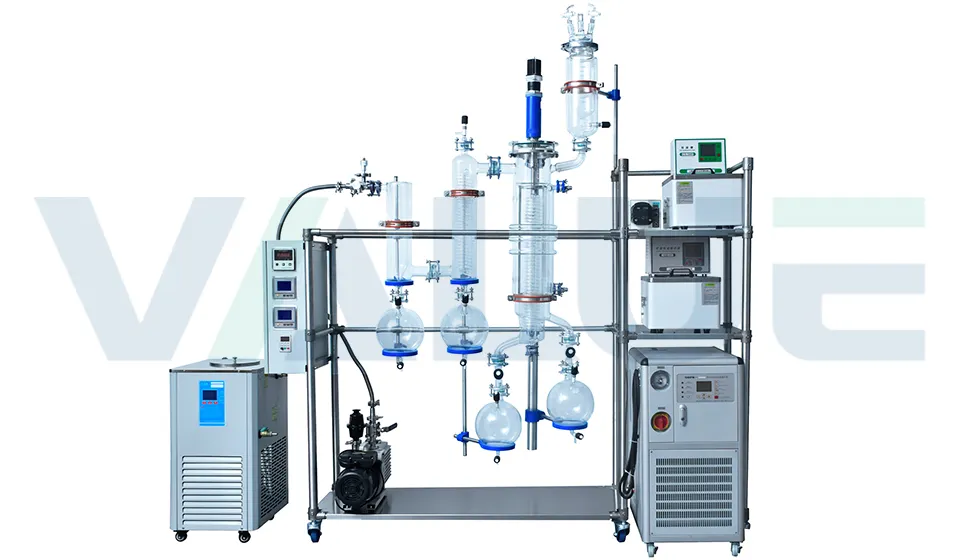
How to Improve the Efficiency of Glass Wiped Film Distillation
Glass wiped film distillation is used to separate and purify materials that may be sensitive to heat. Its performance depends on several factors, including film formation, vacuum conditions, temperature control, rotor design, and material residence time. Optimizing these parameters can help improve evaporation performance while maintaining product quality.
1. How Does Glass Wiped Film Distillation Work?
In a glass wiped film evaporator, liquid is distributed across a heated surface to form a thin film. A rotating wiper continuously spreads and moves the material, supporting heat transfer and allowing volatile components to evaporate.
Compared with conventional distillation methods, wiped film technology can reduce the time materials spend exposed to heat. This makes it useful for processing heat-sensitive compounds and viscous liquids.
Glass construction also allows operators to observe the material during processing, which is helpful for laboratory research, process development, and small-scale production.
2. What Factors Affect Distillation Efficiency?
Several operating and equipment parameters influence the performance of a glass wiped film distillation system.
Vacuum Level
Operating under vacuum lowers the boiling temperature of many substances, helping reduce thermal stress during evaporation. The appropriate vacuum level depends on the properties of the material, its volatility, and the desired separation results.
Stable vacuum conditions can help maintain consistent operation, particularly when processing heat-sensitive compounds.
Temperature Control
Accurate temperature regulation is important for balancing evaporation performance and product quality. Excessive heating may cause degradation, while insufficient heating can reduce evaporation rates.
The heating system should therefore provide a suitable and stable temperature based on the material's characteristics and the required separation process.
Wiper and Rotor Design
The rotating wiper helps distribute the liquid evenly over the heated surface. A suitable wiper configuration promotes consistent film formation and reduces the risk of localized overheating.
Rotor design and rotational speed should be selected according to material viscosity and processing requirements. This is especially important for viscous liquids that are more difficult to distribute evenly.
Residence Time
Residence time refers to how long the material remains inside the evaporation zone. Shorter exposure can help limit thermal degradation, while adequate contact with the heated surface is still necessary for effective separation.
Adjusting feed rate, rotor speed, and operating conditions can help achieve a suitable balance between processing capacity and product quality.
3. Where Is Glass Wiped Film Distillation Used?
Glass wiped film distillation is suitable for applications that require controlled evaporation or purification under reduced pressure.
Pharmaceutical and specialty chemical processing: It can be used to separate solvents and purify suitable chemical compounds, particularly when temperature sensitivity is a concern.
Natural extracts and aromatic compounds: Carefully controlled evaporation can help preserve volatile components during the concentration or purification of suitable extracts.
Food and flavor processing: The technology may be applied to selected flavor compounds and extracts where maintaining aroma and product characteristics is important.
The actual suitability of the system depends on the material properties, required purity, and operating conditions.
4. How Can You Maintain Consistent Performance?
Good operating practices and regular maintenance help keep a wiped film distillation system working reliably.
- Monitor operating parameters: Keep track of temperature, vacuum level, feed rate, and rotor speed to identify changes in performance.
- Inspect the wiper assembly: Check for wear, damage, or buildup that could affect film distribution.
- Keep process surfaces clean: Remove residual material according to the appropriate cleaning procedure to reduce contamination and prevent deposits from affecting heat transfer.
- Check seals and connections: Inspect sealing components and vacuum connections regularly to identify potential leaks.
- Select suitable supporting equipment: Ensure that heating systems, vacuum pumps, condensers, and collection vessels are appropriate for the process requirements.
Consistent monitoring and preventive maintenance can reduce unexpected interruptions and help maintain stable product quality.
5. How Do You Choose the Right Glass Wiped Film Distillation System?
Before selecting a system, consider the material to be processed, its viscosity and thermal sensitivity, the required evaporation rate, and the target separation or purity.
The required operating temperature and vacuum level should also be confirmed. These factors influence the evaporator design and the selection of supporting equipment.
For more demanding applications, it may be useful to evaluate the feed system, rotor configuration, temperature-control capability, and condensate collection arrangement as a complete process setup rather than choosing the evaporator alone.
Conclusion
Improving glass wiped film distillation efficiency requires a balance between heat transfer, vacuum conditions, film distribution, temperature control, and residence time. The right combination helps support effective separation while reducing unnecessary thermal exposure.
By matching the equipment configuration to the material and maintaining stable operating conditions, users can improve process consistency and make better use of their distillation system.


