
How Do Material Selection and Mixing Design Affect Stainless Steel Reactor Performance?
2026-11-05
How Do Material Selection and Mixing Design Affect Stainless Steel Reactor Performance?
The performance of an industrial stainless steel reactor depends on several important factors, including material compatibility, heat transfer, and mixing efficiency. Selecting the right stainless steel grade and designing an appropriate agitation system can help maintain product quality, improve processing consistency, and reduce equipment maintenance.
For chemical, pharmaceutical, and food-related applications, these factors are particularly important because corrosion, poor temperature distribution, or inadequate mixing can affect both production efficiency and product purity.
1. How Do You Select the Right Stainless Steel Material?
Stainless Steel Grade and Chemical Compatibility
The choice of stainless steel directly affects the reactor's durability and resistance to corrosion. SUS304 and SUS316L are commonly used in industrial reactor construction, but their suitability depends on the process environment.
SUS316L contains molybdenum, which generally provides better resistance to pitting and certain corrosive chemicals than SUS304. It is often considered for applications involving more demanding chemical conditions.
For highly corrosive environments, duplex stainless steel or specialized alloys such as Hastelloy may be necessary. However, these materials usually involve higher costs. Before making a selection, consider the chemical composition, concentration, operating temperature, and expected service life.
Why Is Surface Finish Important?
The internal surface finish affects cleaning efficiency and the possibility of material residue accumulating inside the vessel.
A smoother surface makes it easier to remove deposits and reduces areas where contaminants may remain. This is especially important in pharmaceutical and food-related processes that require strict hygiene standards.
Mechanical polishing and electropolishing are common surface treatment options. The required finish should be selected according to the product, cleaning procedure, and applicable industry requirements. Regular inspection also helps maintain the surface condition over time.
2. How Does Reactor Jacket Design Affect Heat Transfer?
Choosing a Suitable Jacket Structure
The heating and cooling performance of a reactor is closely related to its jacket design.
Dimple jackets use a patterned structure to influence the flow of the heating or cooling medium, potentially improving heat transfer compared with some conventional jacket designs.
Half-pipe coil jackets provide additional heat transfer surface area and can offer structural advantages for certain operating conditions. They are often considered where specific thermal performance or pressure requirements need to be addressed.
The selection should take into account the required heating and cooling speed, temperature range, pressure conditions, and overall reactor design.
Insulation and Energy Consumption
Insulation helps reduce heat loss during operation and improves the energy efficiency of the reactor system. This is particularly useful in processes involving elevated temperatures or extended heating periods.
Suitable insulation materials can also help maintain stable operating conditions and reduce the temperature of external surfaces. The insulation type and thickness should be selected according to the operating temperature and installation environment.
3. How Does Mixing Design Influence Reactor Performance?
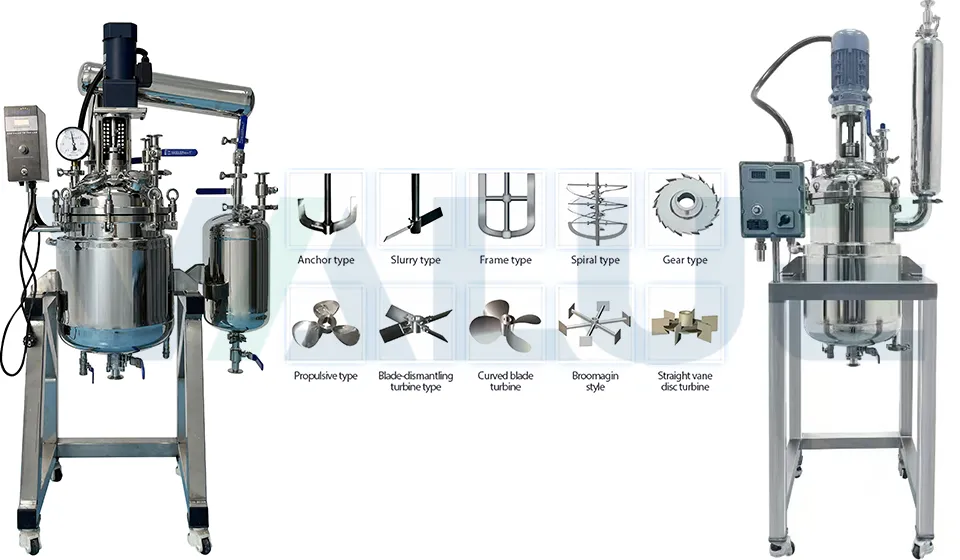
Selecting the Right Impeller
The agitator has a direct influence on mixing quality, circulation, and power consumption.
Axial-flow impellers move material mainly along the vertical direction, making them suitable for general blending and applications requiring good circulation. They are commonly used with low- to medium-viscosity liquids.
Radial-flow impellers generate stronger radial movement and higher shear, which can be useful for gas dispersion and certain mass-transfer processes. However, they may require more power depending on the operating conditions.
The appropriate impeller should be selected according to material viscosity, solids content, mixing objectives, and required agitation intensity.
Baffles and Fluid Movement
Baffles are installed inside the reactor to reduce unwanted swirling and improve fluid circulation. Without suitable baffles, the liquid may rotate together with the agitator, resulting in less effective mixing.
Properly positioned baffles help improve flow distribution and support heat and mass transfer throughout the vessel.
Different baffle arrangements may be used depending on the reactor size and process requirements. For more complex applications, flow simulation and mixing tests can help evaluate the most suitable configuration.
4. How Can Automation Improve Reactor Operation?
Temperature and Pressure Monitoring
Accurate monitoring of operating conditions helps maintain process stability and supports safe reactor operation.
Temperature sensors provide feedback for heating and cooling control, while pressure instruments help operators monitor internal pressure and identify abnormal conditions.
These instruments can be connected to a control system to display operating data and adjust parameters such as temperature and stirring speed. Data recording also makes it easier to compare different batches and identify process variations.
Automated Cleaning
Clean-in-place (CIP) systems can simplify cleaning procedures by circulating cleaning solutions through the reactor without requiring complete equipment disassembly.
Spray devices can distribute cleaning fluid across internal surfaces, helping remove residual materials between production batches.
For applications with strict hygiene requirements, cleaning procedures should be properly evaluated and validated. Factors such as cleaning temperature, solution concentration, flow rate, and cleaning time all need to be considered.
5. What Maintenance Practices Help Extend Reactor Service Life?
Regular maintenance is important for keeping a stainless steel reactor in reliable working condition.
Routine inspections should cover the vessel's internal surfaces, mechanical seals, valves, connections, and agitation components. Corrosion, leakage, abnormal vibration, or unusual wear should be addressed before they lead to more serious equipment problems.
Mechanical seals require particular attention because damage or improper installation may cause leakage and affect process safety.
In addition to routine inspections, monitoring heat transfer performance and mixing conditions can help identify potential problems such as surface fouling or insufficient circulation.
Keeping maintenance records also makes it easier to track equipment condition and plan preventive servicing.
6. How Can You Optimize Overall Reactor Performance?
Improving reactor performance requires considering the equipment as a complete system rather than focusing on a single component.
Material selection should match the chemical environment, while the jacket and insulation should support the required temperature conditions. The impeller and baffle configuration should also be appropriate for the material properties and mixing objectives.
Regularly reviewing operating data, energy consumption, cleaning results, and maintenance records can reveal opportunities for further improvement.
Adjustments to stirring speed, heating and cooling conditions, or mixing components should always be based on actual process requirements and equipment limits.
Frequently Asked Questions
1. How do you choose between SUS304 and SUS316L for a reactor?
The choice depends on the chemicals being processed and the operating conditions. SUS316L generally offers better resistance to certain corrosive environments, but compatibility should be checked for the specific material and concentration.
2. How does impeller design affect mixing performance?
Different impellers produce different flow patterns and shear levels. Axial-flow impellers are commonly used for general circulation, while radial-flow designs are suitable for applications requiring stronger shear or gas dispersion.
3. Why is reactor jacket design important?
The jacket affects heat transfer and temperature control. A suitable design helps achieve the required heating or cooling performance under the intended operating conditions.
4. How can regular maintenance improve reactor reliability?
Inspecting seals, internal surfaces, valves, and stirring components helps identify wear or damage early. Preventive maintenance can reduce unexpected downtime and support longer equipment service life.
Conclusion
Stainless steel reactor performance is influenced by material compatibility, surface finish, heat transfer, mixing design, and process control. Each factor contributes to the overall efficiency and reliability of the equipment.
By selecting suitable construction materials, optimizing the jacket and agitation system, and following proper maintenance procedures, manufacturers can improve process consistency and achieve more reliable reactor operation.
How Do Material Selection and Mixing Design Affect Stainless Steel Reactor Performance?
The performance of an industrial stainless steel reactor depends on several important factors, including material compatibility, heat transfer, and mixing efficiency. Selecting the right stainless steel grade and designing an appropriate agitation system can help maintain product quality, improve processing consistency, and reduce equipment maintenance.
For chemical, pharmaceutical, and food-related applications, these factors are particularly important because corrosion, poor temperature distribution, or inadequate mixing can affect both production efficiency and product purity.
1. How Do You Select the Right Stainless Steel Material?
Stainless Steel Grade and Chemical Compatibility
The choice of stainless steel directly affects the reactor's durability and resistance to corrosion. SUS304 and SUS316L are commonly used in industrial reactor construction, but their suitability depends on the process environment.
SUS316L contains molybdenum, which generally provides better resistance to pitting and certain corrosive chemicals than SUS304. It is often considered for applications involving more demanding chemical conditions.
For highly corrosive environments, duplex stainless steel or specialized alloys such as Hastelloy may be necessary. However, these materials usually involve higher costs. Before making a selection, consider the chemical composition, concentration, operating temperature, and expected service life.
Why Is Surface Finish Important?
The internal surface finish affects cleaning efficiency and the possibility of material residue accumulating inside the vessel.
A smoother surface makes it easier to remove deposits and reduces areas where contaminants may remain. This is especially important in pharmaceutical and food-related processes that require strict hygiene standards.
Mechanical polishing and electropolishing are common surface treatment options. The required finish should be selected according to the product, cleaning procedure, and applicable industry requirements. Regular inspection also helps maintain the surface condition over time.
2. How Does Reactor Jacket Design Affect Heat Transfer?
Choosing a Suitable Jacket Structure
The heating and cooling performance of a reactor is closely related to its jacket design.
Dimple jackets use a patterned structure to influence the flow of the heating or cooling medium, potentially improving heat transfer compared with some conventional jacket designs.
Half-pipe coil jackets provide additional heat transfer surface area and can offer structural advantages for certain operating conditions. They are often considered where specific thermal performance or pressure requirements need to be addressed.
The selection should take into account the required heating and cooling speed, temperature range, pressure conditions, and overall reactor design.
Insulation and Energy Consumption
Insulation helps reduce heat loss during operation and improves the energy efficiency of the reactor system. This is particularly useful in processes involving elevated temperatures or extended heating periods.
Suitable insulation materials can also help maintain stable operating conditions and reduce the temperature of external surfaces. The insulation type and thickness should be selected according to the operating temperature and installation environment.
3. How Does Mixing Design Influence Reactor Performance?
Selecting the Right Impeller
The agitator has a direct influence on mixing quality, circulation, and power consumption.
Axial-flow impellers move material mainly along the vertical direction, making them suitable for general blending and applications requiring good circulation. They are commonly used with low- to medium-viscosity liquids.
Radial-flow impellers generate stronger radial movement and higher shear, which can be useful for gas dispersion and certain mass-transfer processes. However, they may require more power depending on the operating conditions.
The appropriate impeller should be selected according to material viscosity, solids content, mixing objectives, and required agitation intensity.
Baffles and Fluid Movement
Baffles are installed inside the reactor to reduce unwanted swirling and improve fluid circulation. Without suitable baffles, the liquid may rotate together with the agitator, resulting in less effective mixing.
Properly positioned baffles help improve flow distribution and support heat and mass transfer throughout the vessel.
Different baffle arrangements may be used depending on the reactor size and process requirements. For more complex applications, flow simulation and mixing tests can help evaluate the most suitable configuration.
4. How Can Automation Improve Reactor Operation?
Temperature and Pressure Monitoring
Accurate monitoring of operating conditions helps maintain process stability and supports safe reactor operation.
Temperature sensors provide feedback for heating and cooling control, while pressure instruments help operators monitor internal pressure and identify abnormal conditions.
These instruments can be connected to a control system to display operating data and adjust parameters such as temperature and stirring speed. Data recording also makes it easier to compare different batches and identify process variations.
Automated Cleaning
Clean-in-place (CIP) systems can simplify cleaning procedures by circulating cleaning solutions through the reactor without requiring complete equipment disassembly.
Spray devices can distribute cleaning fluid across internal surfaces, helping remove residual materials between production batches.
For applications with strict hygiene requirements, cleaning procedures should be properly evaluated and validated. Factors such as cleaning temperature, solution concentration, flow rate, and cleaning time all need to be considered.
5. What Maintenance Practices Help Extend Reactor Service Life?
Regular maintenance is important for keeping a stainless steel reactor in reliable working condition.
Routine inspections should cover the vessel's internal surfaces, mechanical seals, valves, connections, and agitation components. Corrosion, leakage, abnormal vibration, or unusual wear should be addressed before they lead to more serious equipment problems.
Mechanical seals require particular attention because damage or improper installation may cause leakage and affect process safety.
In addition to routine inspections, monitoring heat transfer performance and mixing conditions can help identify potential problems such as surface fouling or insufficient circulation.
Keeping maintenance records also makes it easier to track equipment condition and plan preventive servicing.
6. How Can You Optimize Overall Reactor Performance?
Improving reactor performance requires considering the equipment as a complete system rather than focusing on a single component.
Material selection should match the chemical environment, while the jacket and insulation should support the required temperature conditions. The impeller and baffle configuration should also be appropriate for the material properties and mixing objectives.
Regularly reviewing operating data, energy consumption, cleaning results, and maintenance records can reveal opportunities for further improvement.
Adjustments to stirring speed, heating and cooling conditions, or mixing components should always be based on actual process requirements and equipment limits.
Frequently Asked Questions
1. How do you choose between SUS304 and SUS316L for a reactor?
The choice depends on the chemicals being processed and the operating conditions. SUS316L generally offers better resistance to certain corrosive environments, but compatibility should be checked for the specific material and concentration.
2. How does impeller design affect mixing performance?
Different impellers produce different flow patterns and shear levels. Axial-flow impellers are commonly used for general circulation, while radial-flow designs are suitable for applications requiring stronger shear or gas dispersion.
3. Why is reactor jacket design important?
The jacket affects heat transfer and temperature control. A suitable design helps achieve the required heating or cooling performance under the intended operating conditions.
4. How can regular maintenance improve reactor reliability?
Inspecting seals, internal surfaces, valves, and stirring components helps identify wear or damage early. Preventive maintenance can reduce unexpected downtime and support longer equipment service life.
Conclusion
Stainless steel reactor performance is influenced by material compatibility, surface finish, heat transfer, mixing design, and process control. Each factor contributes to the overall efficiency and reliability of the equipment.
By selecting suitable construction materials, optimizing the jacket and agitation system, and following proper maintenance procedures, manufacturers can improve process consistency and achieve more reliable reactor operation.


