
Explosion-Proof Glass Molecular Distillation: A Safer Path to High-Purity Separation of Heat-Sensitive Materials
2026-04-30
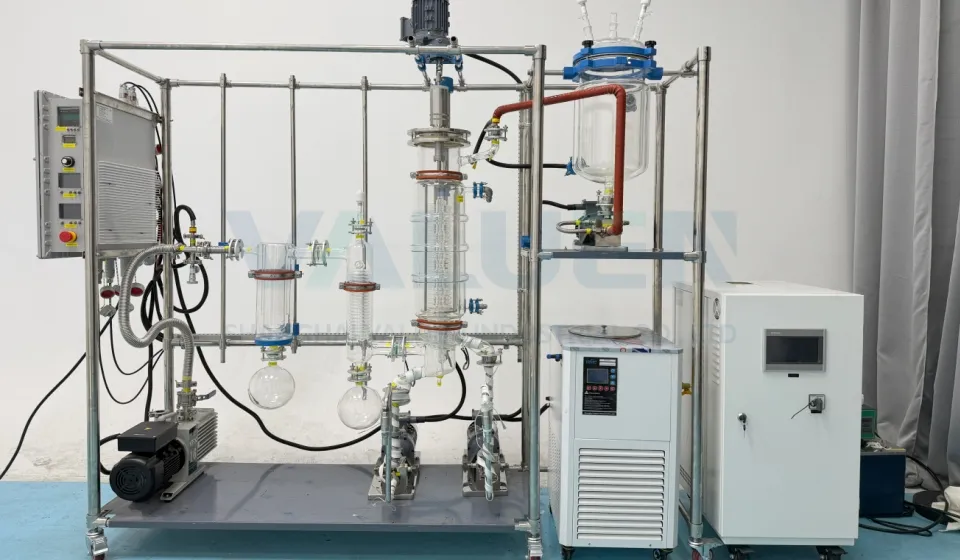
Explosion-Proof Glass Molecular Distillation: A Safer Path to High-Purity Separation of Heat-Sensitive Materials
For separating and purifying high-value, heat-sensitive, or solvent-borne materials, explosion-proof glass molecular distillation systems offer a robust solution. As industries such as pharmaceuticals, essential oils, nutraceuticals, and specialty chemicals pursue higher purity, safer operations, and milder processing conditions, molecular distillation has emerged as a core technology.
This article explores the working principles of ex-proof glass molecular distillation, highlights essential design considerations, and provides guidance on selecting the right system for your specific application.
What Is Glass Molecular Distillation?
Glass molecular distillation is a form of short-path distillation performed under high vacuum, where the molecular mean free path exceeds the distance between the evaporating surface and the condensing surface.
- Compared to conventional distillation, this technique delivers:
- Much lower operational temperatures
- Shorter material residence time
- Reduced thermal breakdown
- Better separation of components with close boiling points
The glass construction offers strong chemical resistance, process visibility, and flexibility—making it especially suitable for lab and pilot-scale setups.
Why Explosion-Proof Design Matters
Many molecular distillation processes use flammable or volatile solvents, including ethanol, hexane, and terpene-based compounds. In these scenarios, an explosion-proof (Ex-proof) molecular distillation system becomes necessary for safe operation.
- Potential hazards addressed by ex-proof design include:
- Ignition of solvent vapors
- Electrical sparks from motors or controllers
- Static electricity accumulation
- Overheating in discharge lines
With an explosion-proof configuration, operational risks are significantly lowered, and compliance with international solvent-handling safety standards is achieved.
Key Components of an Ex-proof Glass Molecular Distillation System
1. Wiped-Film Evaporator
This is the core component, where material spreads into a uniform thin film across the heated surface. PTFE wiper blades are often used to improve heat transfer and prevent residue buildup.
2. High-Vacuum System
Maintaining a stable high vacuum reduces the boiling point of target compounds, enabling separation at lower temperatures and safeguarding heat-sensitive materials.
3. Explosion-Proof Drive & Pumps
- Ex-proof motors for agitators and gear pumps
- Ex-proof electrical components
- Dedicated pumps for light and heavy fraction discharge
4. Jacketed Feed Tank
Provides temperature control and safe handling of viscous or solvent-based feeds.
5. Heated Discharge Lines
Heating tapes prevent solidification or crystallization, ensuring smooth and uninterrupted operation.
Automation in Molecular Distillation
Modern glass molecular distillation systems increasingly rely on automated operation, which brings several benefits:
- Consistent and repeatable process control
- Less reliance on manual operator input
- Greater product uniformity
- Continuous feeding and discharge
Automated systems typically regulate:
- Feed rate
- Wiper speed
- Heating temperature
- Vacuum level
- Fraction collection
This level of control is especially valuable for pilot-scale production and process validation.
How to Choose the Right Molecular Distillation System
When selecting a glass molecular distillation system, keep the following factors in mind:
Material properties – boiling point, viscosity, solvent content, thermal sensitivity
Processing capacity – lab, pilot-scale, or small production
Safety requirements – need for ex-proof motors, controllers, and pumps
Automation level – manual vs. semi-automatic vs. fully automated
Future scalability – ability to upgrade to larger evaporator diameters (e.g., 6 inch, 8 inch)
Explosion-Proof Glass Molecular Distillation: A Safer Path to High-Purity Separation of Heat-Sensitive Materials
For separating and purifying high-value, heat-sensitive, or solvent-borne materials, explosion-proof glass molecular distillation systems offer a robust solution. As industries such as pharmaceuticals, essential oils, nutraceuticals, and specialty chemicals pursue higher purity, safer operations, and milder processing conditions, molecular distillation has emerged as a core technology.
This article explores the working principles of ex-proof glass molecular distillation, highlights essential design considerations, and provides guidance on selecting the right system for your specific application.
What Is Glass Molecular Distillation?
Glass molecular distillation is a form of short-path distillation performed under high vacuum, where the molecular mean free path exceeds the distance between the evaporating surface and the condensing surface.
- Compared to conventional distillation, this technique delivers:
- Much lower operational temperatures
- Shorter material residence time
- Reduced thermal breakdown
- Better separation of components with close boiling points
The glass construction offers strong chemical resistance, process visibility, and flexibility—making it especially suitable for lab and pilot-scale setups.
Why Explosion-Proof Design Matters
Many molecular distillation processes use flammable or volatile solvents, including ethanol, hexane, and terpene-based compounds. In these scenarios, an explosion-proof (Ex-proof) molecular distillation system becomes necessary for safe operation.
- Potential hazards addressed by ex-proof design include:
- Ignition of solvent vapors
- Electrical sparks from motors or controllers
- Static electricity accumulation
- Overheating in discharge lines
With an explosion-proof configuration, operational risks are significantly lowered, and compliance with international solvent-handling safety standards is achieved.
Key Components of an Ex-proof Glass Molecular Distillation System
1. Wiped-Film Evaporator
This is the core component, where material spreads into a uniform thin film across the heated surface. PTFE wiper blades are often used to improve heat transfer and prevent residue buildup.
2. High-Vacuum System
Maintaining a stable high vacuum reduces the boiling point of target compounds, enabling separation at lower temperatures and safeguarding heat-sensitive materials.
3. Explosion-Proof Drive & Pumps
- Ex-proof motors for agitators and gear pumps
- Ex-proof electrical components
- Dedicated pumps for light and heavy fraction discharge
4. Jacketed Feed Tank
Provides temperature control and safe handling of viscous or solvent-based feeds.
5. Heated Discharge Lines
Heating tapes prevent solidification or crystallization, ensuring smooth and uninterrupted operation.
Automation in Molecular Distillation
Modern glass molecular distillation systems increasingly rely on automated operation, which brings several benefits:
- Consistent and repeatable process control
- Less reliance on manual operator input
- Greater product uniformity
- Continuous feeding and discharge
Automated systems typically regulate:
- Feed rate
- Wiper speed
- Heating temperature
- Vacuum level
- Fraction collection
This level of control is especially valuable for pilot-scale production and process validation.
How to Choose the Right Molecular Distillation System
When selecting a glass molecular distillation system, keep the following factors in mind:
Material properties – boiling point, viscosity, solvent content, thermal sensitivity
Processing capacity – lab, pilot-scale, or small production
Safety requirements – need for ex-proof motors, controllers, and pumps
Automation level – manual vs. semi-automatic vs. fully automated
Future scalability – ability to upgrade to larger evaporator diameters (e.g., 6 inch, 8 inch)


